












News
Mtech, NIST Program Evaluates NIST-Developed Technologies for Commercialization Potential
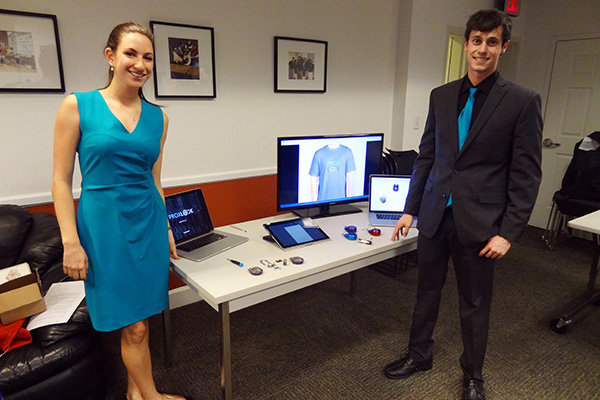
A new technology assessment collaboration between the Maryland Technology Enterprise Institute (Mtech) and the National Institute of Standards and Technology (NIST) launched during the spring 2018 semester to help bring NIST-developed technologies to market. The initiative, called the NIST Technology Market Assessment Program (NIST T-MAP), challenged student teams from the Entrepreneurship and Innovation Program (EIP) to assess the commercialization potential of technologies developed by NIST using Lean LaunchPad customer discovery methodologies. EIP is a joint undergraduate education program of Mtech and the University of Maryland Honors College. “We gave students the opportunity to answer two questions,” said Mark Komisky, J.D., serial entrepreneur, site miner, Maryland Innovation Initiative, and instructor for the program. “First, would they recommend investing time and resources to pursue patent protection and bring this technology to market? And second, how would they go about it? “We told students that this is not an academic exercise. Think of yourself as an analyst in a division that I lead, and you need to let me know if we should put money into this or not. Their mandate was to come up with a go or no-go decision and tell me why.” Participating students each received a $1,000 award after completing the program. Throughout the eight-week program, five three-student teams attended an evening course each week, made customer discovery calls and held weekly team meetings. Faculty advisors from the A. James Clark School of Engineering and College of Computer, Math and Natural Sciences assisted student teams in each technical subject area. “The faculty members were great because they provided perspective as to where the technology fit into a market space,” said Komisky. “Given the range of technologies that we had, from batteries to memory to a fire-protection coating, the University of Maryland is one of the few places in the state that has the breadth of programs to address the technologies we reviewed.” Students enjoyed the program because they were looking at real technologies and were asked to make recommendations, not just weigh all of the options, Komisky explained. Obtaining and competently conducting customer discovery interviews, though, was sometimes a challenge due to a number of factors, including the very early stages of some of the technologies, which limited performance information, and the availability of potential interviewees since the technologies were so new and cutting-edge. In some cases competitive concerns caused interviewees to decline discussions. “Students learned to work through ambiguity,” said Komisky. “They learned about how the real world works.” Lead NIST personnel included the director of the Technology Partnerships Office and the Senior Patent Officer. Students’ recommendations were about 90 percent “spot-on” in their evaluations based upon feedback from NIST, said Komisky. EIP students in the program came from a diversity of majors across campus, including electrical and computer engineering, finance, information systems, public health, economics, psychology and computer science. Teams and technologies for the spring 2018 semester included: GeRAM
Spin RAM
Fire Coating
Electrolyte Battery
Security Tokens
Jay Smith, Director of EIP, was the Principal Investigator of record for the project. Jacob Bremerman, EIP program specialist and recent Honors College graduate, provided project support. EIP received $50,000 from NIST to implement the T-MAP program.
June 27, 2018 Prev Next |
|
