















News
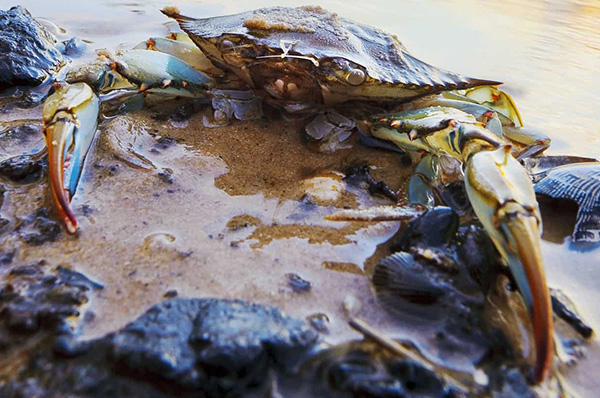
Can Cascading Pools Help Restore the Chesapeake Bay?Samuel Owings's farm outside Chestertown, Maryland may be over a dozen miles from the Chesapeake Bay, but he knows there’s a direct link between his 300 tillable acres and the waterway that supports more than 3,600 animal and plant species. What he and other farmers do on their land can grow or shrink the oxygen-depleted seafloor pockets known as dead zones. The culprits behind the Chesapeake Bay dead zones are millions of pounds of nitrogen and phosphorus from farm fields, city streets, wastewater treatment plants, and gasoline emissions, and other sources. These nutrients spur the growth of algal blooms, which eventually become food for bacteria that consume oxygen as they eat. And roughly 40 percent of the nitrogen and 50 percent of the phosphorus that flows into the bay each year comes from agricultural lands. Aware of his role in a chain of events that threaten the health of the bay and communities that rely on it, Owings designed and installed a series of cascading pools that traps stormwater—and the nutrients it carries—on his land. Department of Civil and Environmental Engineering Professor Allen P. Davis, along with alumna Rosie Myers (M.S. '15), examined the impact of these pools on agricultural runoff for two years with support from the Maryland Industrial Partnerships program, part of the A. James Clark School of Engineering. The promising results will appear in the November print edition of the Journal of Irrigation and Drainage Engineering. Owings, Davis, and Myers hope cascading pools will join the suite of best management practices farmers employ to combat nutrient runoff. These efforts, along with steps taken by communities and wastewater treatment plants, have already yielded measurable improvements to the health of the Chesapeake Bay—in fact, the Univesity of Maryland Center for Environmental Science 2017 Chesapeake Bay Report Card recorded improvements to the overall health of the bay for the first time. Watch the video above to learn more. And for more information on how to install cascading pools on your land, visit www.highimpactenvironmental.org. Are you are a member of the media interested in interviewing Dr. Davis? Please email: clark-communications@umd.edu.
October 11, 2018 Prev Next |
|